Many beginners unknowingly make several Taekwondo mistakes beginners should avoid to progress faster and train more effectively.It is a common problem that all the Taekwondo instructors face while teaching taekwondo to beginners.
The beginners are always excited to copy the senior trainee and want to do all the advanced techniques,, flying kicks,, etc., rather than concentrating on the perfection in the basic movements/techniques, which are the core fundamentals of Taekwondo. It is the sole responsibility of the master to design such drills to motivate and to encourage the beginners to learn and master the basic fundamental movements of Taekwondo. The top 10 mistakes that a beginner should avoid are as follows:
Common Taekwondo Beginner Mistakes and How to Avoid Them
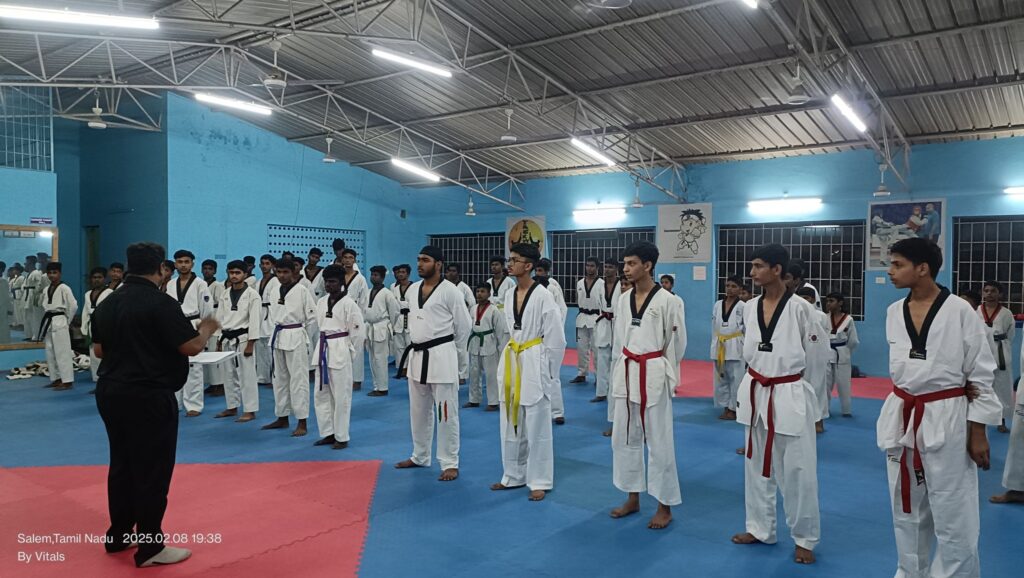
1. Skipping proper warm-up : common Taekwondo mistake
Skipping proper warm-ups and flexibility work stands as a dangerous Taekwondo beginner mistakes that can lead to serious consequences. Many new practitioners rush straight into kicks and forms, underestimating how crucial preparation truly is. Research clearly shows that cold muscles are significantly more prone to injury, yet beginners often view warm-ups as optional rather than essential.
Why warm-ups prevent injury:The science behind warm-ups is straightforward,they prepare your body for the physical demands of Taekwondo by increasing blood flow to muscles, enhancing flexibility, and readying your joints for explosive movements. A legitimate warm-up assists your body with preparing for extraordinary preparation, improves performance, and diminishes the risk of injuries.
The benefits of proper warm-ups include:
- Enhanced muscle flexibility and reduced stiffness
- Increased blood flow to key muscle groups
- Improved balance, coordination, and agility
- Reduced risk of strains, sprains, and muscle pulls
Stretching routines for Taekwondo beginners:Undeniably, warming up activates muscle fibers and optimizes their function, making your body more responsive during explosive movements. Without this preparation, you’ll likely experience stiffness, decreased performance, and potentially serious injuries. Ideally, a good warm-up should require 10 to 20 minutes – time well spent considering the protection it provides.
When creating your pre-class stretching routine, begin with a light warm-up to elevate muscle temperature, followed by dynamic stretches targeting major muscle groups. Regarding sequence, dynamic stretching should come before static stretching – never stretch a cold muscle, as this increases injury risk.
For Taekwondo specifically, focus on these essential areas:
- Hamstrings and splits – crucial for high kicks like front kicks and ax kicks
- Hip flexors and groin – vital for side kicks and roundhouse kicks
- Lower back – provides stability for all techniques
- Shoulders – support blocking movements
Naturally, most Taekwondo classes begin with brief warm-ups followed by stretching, recognizing that warm muscles stretch more effectively. Dynamic warm-ups include movements like leg swings, hip circles, and torso twists, which activate the specific muscles needed for kicking.
Remember, static stretching during cool-downs is just as important as warm-ups. This practice helps reduce delayed-onset muscle soreness and enhances long-term flexibility. Hold each stretch for approximately 20-30 seconds, focusing on breathing and relaxation to allow your muscles to elongate effectively.
2.Poor Posture and Body Alignment
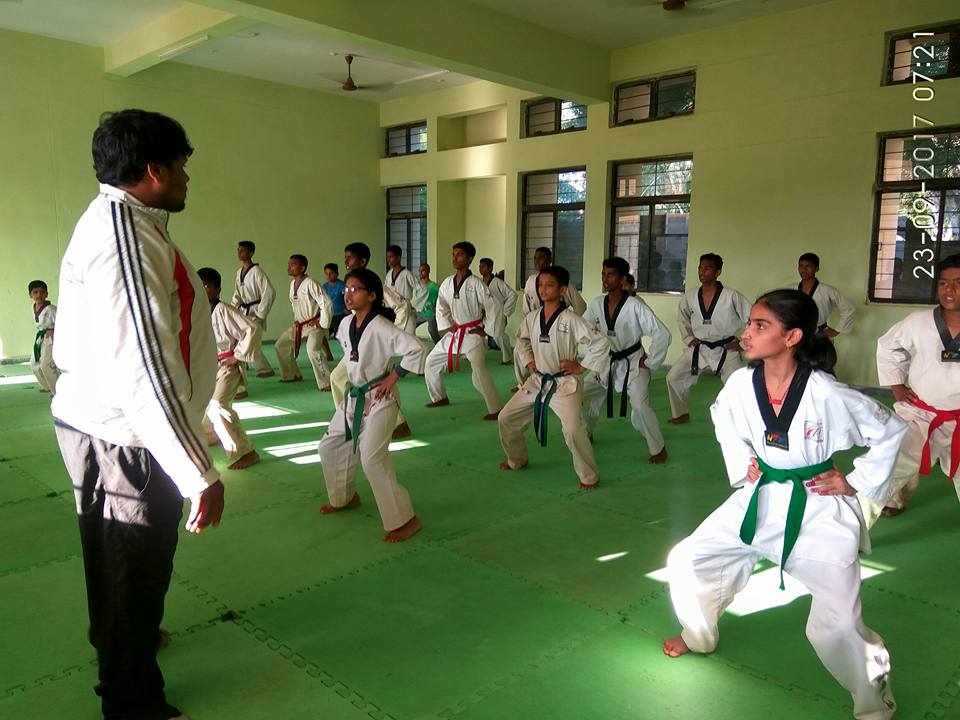
Proper alignment forms the backbone of effective technique execution, yet many practitioners overlook this fundamental aspect of their training. Bad body posture affects everything Incorrect alignment fundamentally sabotages your techniques in multiple ways.
Firstly, poor posture creates unnecessary tension in your muscles, limiting your range of motion and speed. Henceforth, even perfectly executed kicks lack power when your body isn’t properly aligned. Additionally, improper alignment places excessive stress on your joints—particularly the knees and lower back—making injuries almost inevitable over time. As a matter of fact, many chronic training injuries trace back to alignment issues rather than acute accidents.
How to keep refining your fundamentals To improve your posture, practice in front of mirrors whenever possible. Alternatively, record training sessions to identify alignment issues you might miss during practice. Forthwith, incorporate these alignment checks into your routine, Keep your spine neutral during all movements Align your knees directly over your ankles when in stance Maintain proper head position—neither jutting forward nor tilting back .
Remember that correcting alignment issues requires patience and consistent attention. Occasionally, returning to basic stances and movements allows you to rebuild your foundation with proper alignment at the center.
3.Not pivoting or rotating hips in kicks
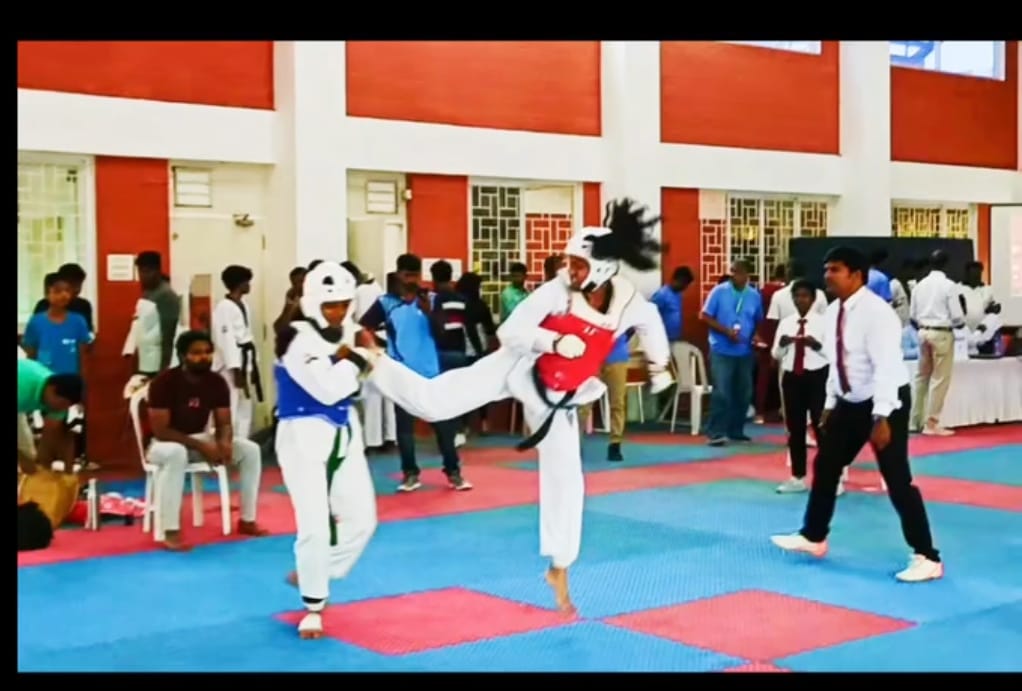
One of the most critical Taekwondo beginner mistakes consistently observe involves failing to pivot or rotate the hips during kicks. Many new practitioners focus exclusively on leg extension without realizing that proper hip rotation is what truly generates power. Indeed, martial arts experts emphasize that maximum kinetic energy comes from effectively applying body weight through hip rotation.
The role of hip rotation in power generation
Hip rotation isn’t just a technical detail—it’s the engine behind your kicks. Mathematically speaking, maximum force comes from combining body weight and speed, and proper hip rotation significantly increases both. As one Taekwondo master explains, “The large abdominal muscles are twisted to provide additional body momentum. Thus the hip rotates in the same direction as that of the attacking tool”.
Without this rotation, your kicks remain weak regardless of how strong your legs are. Think of your body as a whip—the power starts from your core and transfers through your hip to your leg. Without this chain of energy, you’re essentially pushing rather than striking.
In Olympic Taekwondo especially, proper internal rotation of the kicking leg at the hip joint is absolutely essential. For techniques like roundhouse kicks, the hip must rotate medially to prevent a vertical kick, which delivers minimal force to vertical targets. This explains why many beginners struggle with power generation despite having strong legs.
High-level research confirms this connection between hip mechanics and kick effectiveness. Studies examining proximal-to-distal movement sequences (PDMS) show that power generation relies on well-coordinated sequential actions that transfer momentum from larger to smaller segments of the kinematic chain. Better ranked fighters demonstrate more balance variation and stronger hip abduction, which directly enhances kicking height and impact.
How to practice pivoting correctly
To improve your pivoting technique, focus initially on these fundamental approaches:
- Practice proper foot positioning – When executing kicks like side or roundhouse kicks, pivot your supporting foot so it points in the opposite direction of your kick. This provides better support and reach.
- Pivot before weight shift – Many beginners make the mistake of pivoting on the ball of the foot after their weight is already on it. Instead, try pivoting on your heel before shifting your weight onto the foot. This creates a more natural, quick movement.
For daily practice, consider these specific drills:
- Practice standing kicks while focusing exclusively on hip engagement
- Use slow-motion repetitions to feel the proper sequence of movements
- Train with resistance bands around your hips to strengthen rotational muscles
Equipment choices can also affect your pivoting ability. Different mats create different friction levels—foam puzzle mats like those used in Taekwondo sparring matches may provide better pivoting conditions. Alternatively, some practitioners find flexible footwear like Vibram five fingers helpful for developing proper foot mechanics.Strong stances form the foundation of Taekwondo techniques—without them, balance and power suffer.
Above all, remember that power comes from the ground up. The pivoting of your foot while on the balls of your feet combined with hip rotation creates the foundation for powerful kicks. Without this foundation, no amount of leg strength will generate impressive kicks.
4.Overusing power instead of technique
Many aspiring martial artists make the Taekwondo beginner mistake of relying too heavily on raw strength rather than developing proper technique. Throughout my years of teaching, I’ve watched beginners strain muscles and exhaust themselves trying to power through techniques that should feel effortless with correct execution. This common error not only limits progress but can lead to frustration when more technically skilled practitioners easily outperform stronger ones.
Why technique beats power
The science behind effective Taekwondo is clear: proper technique will always generate more power than brute force alone. This might seem counterintuitive, yet as many experts explain, “a correct punch is the most powerful way to punch”. The pursuit of technique is the pursuit of power—they’re interconnected rather than separate concepts.
In Taekwondo specifically, power comes from coordinated body mechanics, not just muscle. As one master explains, “in order to reach full impact, an individual has to use his entire body mass behind a move, not just his arms and legs”. This principle applies equally to smaller practitioners who must rely on technical precision to overcome larger opponents.
Think about it like this: throwing a bullet with your hand won’t cause much damage, yet that same bullet fired from a gun becomes lethal. Similarly, proper technique multiplies force through efficient movement. Even world champions with perfect technique would be helpless against significantly stronger opponents if technique didn’t magnify power.
Training drills to improve control
To shift from power-focused to technique-focused training, incorporate these specialized drills:
- Slow-motion repetitions – Practicing techniques at reduced speed allows you to develop deeper understanding of mechanics and build proper muscle memory
- Isolation drills – Stand before a mirror and practice basic movements, focusing on making motions as quick and condensed as possible
- Focus on fundamentals – Rather than working directly on a problematic technique, identify and strengthen its component parts (e.g., improving round kicks by working on balance)
- Conscious breathing practice – Proper breath control (exhaling sharply at impact) naturally tenses muscles and increases force without additional effort
Remember that consistent repetition with attention to detail helps you notice and correct small errors in form. As one instructor advises, “always learn the techniques and moves the right way the first time. It is more difficult to go back and unlearn what has already been taught”.
Finally, maintain a positive mental attitude throughout this process. Mental clarity and a “yes I can” mindset are absolutely essential for mastering technical aspects of Taekwondo. Ironically, by focusing less on generating power and more on refining technique, you’ll ultimately develop far more powerful and effective movements.
5.Rushing through forms and drills
Rushing through forms and drills represents a fundamental Taekwondo beginner mistake that undermines proper learning and development. Many novices hurry through movements without realizing that speed should never come at the expense of accuracy and precision. This mistake is particularly common as students eagerly progress through their training.
The danger of speed over accuracy
The temptation to speed through forms primarily comes from wanting to appear more advanced. Nonetheless, performing techniques with improper execution builds incorrect muscle memory that becomes increasingly difficult to correct later. Many practitioners fall into the trap of mindlessly “going through the motions”—low block, mid punch, turn, low block, punch, kiyaap—without truly understanding what each movement represents.
Consider the four-count rhythm taught in many Taekwondo schools. Although this structured approach provides organization, rushing through these counts without proper attention to detail robs you of the deeper understanding of combat applications. Generally, it’s this thoughtful practice that transforms basic movements into powerful techniques.
How to slow down and focus on form
To improve form precision, consciously slow down your movements during practice. This deliberate approach yields several benefits:
- Enhanced muscle memory – Slow movements reinforce correct patterns that become automatic over time
- Improved balance and stability – Controlled execution allows you to maintain proper position throughout each technique
- Greater focus and concentration – Moving slowly requires heightened attention to detail
- Better precision and control – Reduced speed permits refinement of each movement
Forth with, commit to consistent repetition of techniques at reduced speeds. As a result, you’ll develop deeper understanding of proper mechanics and build the muscle memory necessary for fluid execution. Meanwhile, visualization strategies can significantly enhance your retention of complex movements, making sequences more instinctive.
Taekwondo beginner drills to do at home
Home practice offers valuable opportunities to refine your form without the pressure of class settings. Start with basic stance training, focusing on stability and proper alignment. Subsequently, add simple kicking drills that emphasize technique rather than power or speed.
Throughout your home training, utilize visual repetition strategies to enhance memorization. Obviously, practice before a mirror whenever possible to self-correct positioning errors. Additionally, record yourself performing forms to identify areas needing improvement.
Remember that mastery in Taekwondo isn’t just about repetition—it’s about mindful practice and continuous refinement. By slowing down and focusing on quality execution, you’ll develop the solid foundation necessary for advanced training.
6.Ignoring breathing techniques
A frequently overlooked Taekwondo beginner mistake is ignoring proper breathing techniques, yet this fundamental aspect directly impacts your overall performance. Breathing in Taekwondo isn’t just about taking in air—it’s about building focus, control, and generating power in each movement. Fundamentally, Taekwondo practitioners who master proper breathing notice stronger, more precise movements, better balance, and greater mental clarity.Improper breathing affects stamina, rhythm, and focus during sparring and poomsae practice.
How breathing affects stamina and focus
Proper breathing significantly influences both physical endurance and mental concentration. First, when you breathe correctly, you supply your muscles with maximum oxygen, delaying fatigue and providing more energy for extended training sessions. In fact, studies show that appropriate breathing techniques can regulate mood and state of mind, helping you maintain calmness under pressure.
Physiologically, oxygen-rich blood delays the onset of muscle fatigue, extending your physical capabilities during intense training. This happens because proper Taekwondo breathing techniques ensure your body receives the oxygen necessary for muscle function without exhaustion or dizziness.
Additionally, breathing properly helps with:
- Regulating energy expenditure during high-intensity moments
- Calming your mind for better decision-making during sparring
- Creating more powerful strikes through synchronized breathing
- Improving recovery between intense training rounds
Simultaneously, proper breathing enhances mental focus—a critical component in Taekwondo training. As one instructor notes, “Breathing is often overlooked in martial arts, yet it’s one of the most powerful tools for improving performance, endurance, and mental clarity”.
Simple breathing drills for beginners
To develop effective breathing habits, start with basic exercises you can practice daily. Try this simple abdominal breathing drill: lie on your back, place one hand on your abdomen and another on your chest. Breathe deeply into your lower abdomen (your lower hand should rise while your chest remains still). Count how long it takes to fill your abdomen, hold briefly, then exhale completely.
For Taekwondo-specific practice, synchronize your breath with your movements—inhale during preparation and exhale sharply upon technique execution. Coupled with proper technique, this breathing pattern maximizes internal energy and strengthens vital organs.
Throughout your training, remember that breathing represents “the breath of Taekwondo”. Many beginners unintentionally hold their breath during techniques, which diminishes performance and increases fatigue. Under those circumstances, making conscious breathing a priority will dramatically improve your Taekwondo journey.
7. Taekwondo mistakes-Lack of Consistent Training Routine
The subtle Taekwondo beginner mistake many overlook is failing to establish a consistent training routine. Unlike technical errors, this mistake quietly undermines your progress over time. Research shows consistency beats talent almost every time in martial arts development.
Establishing a regular training schedule effectively transforms Taekwondo from an occasional activity into a habit. Yet many beginners train intensively for short periods, then take extended breaks, creating a cycle that prevents genuine skill development.
Setting specific training days each week as non-negotiable appointments helps overcome this pattern. Treat these sessions like any important commitment—essential rather than optional. Primarily, what matters isn’t perfection but showing up consistently, even when motivation wanes.
Small, targeted practice between formal classes dramatically accelerates improvement. These don’t need to be lengthy workouts—even brief, focused sessions build muscle memory when done regularly.
Training partners provide accountability that makes consistency easier. Notably, they help maintain motivation through challenging periods when you might otherwise skip sessions.
Immediately establish realistic goals that keep you engaged without overwhelming your schedule. Remember that Taekwondo is a lifelong journey with inevitable ups and downs. The practitioners who achieve mastery aren’t necessarily the most talented—they’re simply those who kept showing up.
Top FAQ’S
1. Why do most Taekwondo beginners struggle even after months of training?
Many beginners struggle because they repeat common Taekwondo mistakes—like skipping warm-ups, using strength instead of technique, and rushing through forms. Fixing these early helps you progress faster and build real skill.
2. How can I tell if I’m making a Taekwondo technique mistake?
If your kicks feel weak, your balance is off, or your movements feel forced, you’re likely committing one of the beginner Taekwondo mistakes. Recording your practice or asking your instructor for feedback can help spot and correct them.
3. What’s the biggest Taekwondo mistake that slows down progress?
The biggest mistake is inconsistency—missing regular practice breaks the flow of muscle memory and discipline. Even short, daily sessions are better than irregular intense workouts.
Conclusion
Avoiding common Taekwondo mistakes is one of the smartest steps any beginner can take to build a strong foundation in martial arts.Mastering Taekwondo requires more than just learning flashy kicks and techniques. Throughout this guide, we’ve explored the hidden mistakes that often derail beginners’ progress. Certainly, avoiding these common pitfalls will significantly accelerate your development and help prevent unnecessary injuries along your martial arts journey.
Remember that proper stance and balance serve as your foundation for everything else in Taekwondo. Without this solid base, even the most impressive techniques lack power and effectiveness. Additionally, maintaining your guard, properly rotating your hips, and focusing on technique over raw power will transform your movements from awkward attempts into fluid, powerful expressions of martial artistry.
Patience stands as perhaps the most valuable attribute for any Taekwondo student. Many beginners rush through forms, skip warm-ups, or become overconfident after learning a few basic techniques. Nevertheless, those who embrace the slow, methodical process of building fundamentals ultimately progress faster than those seeking shortcuts.
Your breathing, posture, and consistency work together to create lasting improvement. These elements might seem less exciting than breaking boards or sparring, yet they form the backbone of true mastery. Most importantly, developing these habits early prevents the formation of bad patterns that become increasingly difficult to correct later.
The journey through Taekwondo ranks represents more than just learning physical techniques—it builds discipline, focus, and perseverance that extend far beyond the training hall. Though challenges will arise, staying mindful of these common mistakes will help you navigate obstacles more effectively.
Start your training sessions with intention, remain humble regardless of your progress, and practice consistently even when motivation wanes. Therefore, you’ll not only become a skilled martial artist but also develop qualities that serve you throughout life. The path of Taekwondo offers lifelong learning opportunities for those dedicated to walking it correctly from the beginning.Remember, every expert was once a beginner who learned from their mistakes. Stay patient, train consistently, and always focus on proper technique. When you avoid these Taekwondo mistakes, you set yourself on the path to becoming a disciplined and skilled martial artist.
For more beginner-friendly tips, training guides, and expert insights, explore our latest resources on vitaltaekwondo.com.
.