Poomsae is an imaginary shadow fight that is important to Taekwondo athletes who also practice Kyorugi. If you want to master the skills in Kyorugi, you should practice poomsae because in poomsae, the offensive and defensive movements are all integrated. We usually practice without an opponent, but we can imagine that there is an opponent, and accordingly, we will practice. Understanding why poomsaes are important in Taekwondo is essential for anyone serious about mastering this martial art.
In taekwondo, taegeuk is a set of Pumsae (also known as Poomsae or Poomse), or a defined pattern of defense-and-attack forms used to teach taekwondo. These planned sequences of motions are more than just physical workouts; they are lessons that show Taekwondo’s philosophy, discipline, and character. Taekwondo is meaningless without poomsae. By practicing poomsae, you can develop precision, balance, and coordination, making it an essential component of Taekwondo training.
1. The Meaning and Purpose of Poomsae in Taekwondo
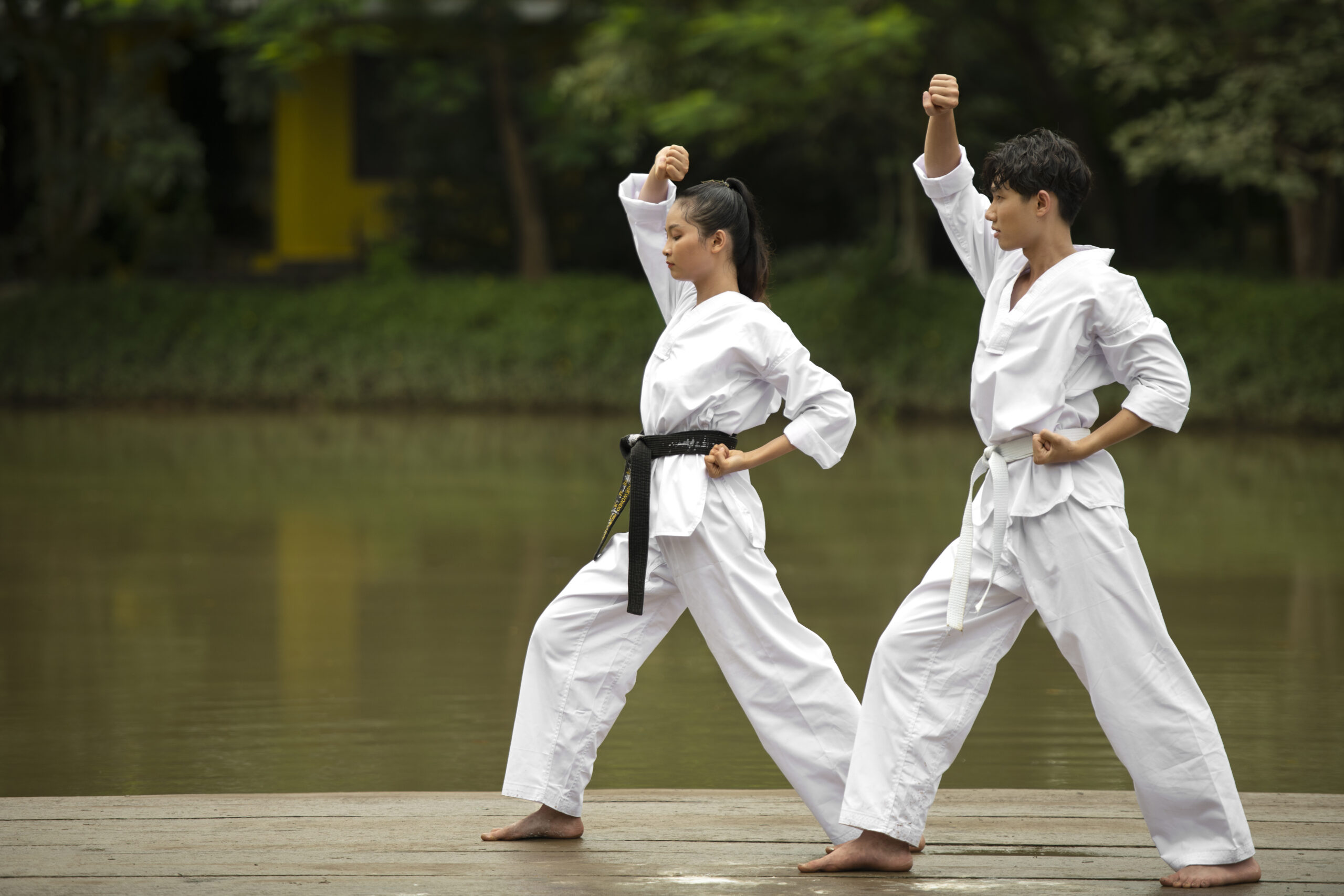
Poomsae means “form” or “pattern” but it means much more than that. Every move in a Poomsae has a reason for being there. It teaches balance, accuracy, timing, and control. Poomsae is fundamental in Taekwondo as it helps practitioners internalize techniques, improve their form, and develop a deeper understanding of martial arts principles. These patterns mimic real-life fighting situations, giving practitioners a chance to improve their reflexes and technique without a partner.
2.Types of Taekwondo poomsae
1. Official Poomsae
Official Poomsaes are those have been mandated by an official organization.
2. Creative Poomsae
Creative Poomsae are intended to go beyond the limited movements of the official poomsae in order to express the beauty and extensiveness of Taekwondo in a unique and innovative way.
3. Taekwondo-mu
Taekwondo-mu is an artistic martial dance routine, characterized by dance elements, rhythmic movements, and taekwondo techniques set to music. It combines artistic elements with basic taekwondo techniques.
Since Poomsae is a system of offensive and defensive techniques, there are many variations. The linkage between techniques is also diverse, requiring attention to detail when learning and practicing each Poomsae. Follow the points when practicing:
- Understand the significance and structural principle of Poomsae practice.
- Understand the movement lines and performance of each Poomsae.
- When performing, maintain the individual characteristics of each Poomase.
- At the beginning and end of each Poomase, bow to show respect.
3. Classification of Poomsae Pattern:
Name of the Poomsae: TAEKWONDO
| NAME OF THE PATTERN | NO. OF THE PATTERN | KIHAP |
|---|---|---|
| 1ST JANG | 18 | 18TH COUNT |
| 2nd JANG | 18 | 18TH COUNT |
| 3RD JANG | 20 | 20TH COUNT |
| 4TH JANG | 20 | 20TH COUNT |
| 5TH JANG | 20 | 20TH COUNT |
| 6TH JANG | 19 | 13TH COUNT |
| 7TH JANG | 25 | 25TH COUNT |
| 8TH JANG | 27 | 6TH &9TH COUNT |
4. Principles of Poomsae Creation
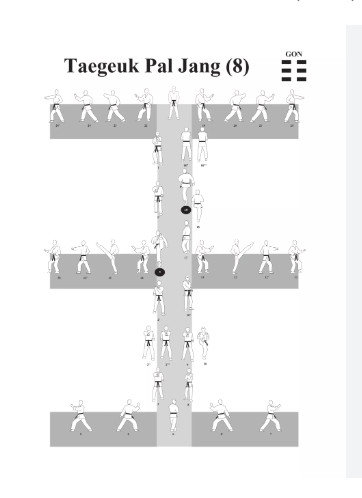
There are certain principles that must be followed when creating Poomsae. Poomase has practical combat applications, and yet it should be suitable for solo practice in a limited space. It should follow a certain movement line, and both hands and feet must be utilized for offensive and defensive techniques.
The general principles of creating a poomsae are:
- The line of the movements should follow a fixed Poomsae diagram
- The movements should be symmetrical to the right and left and front and back so that both sides of the body are equally developed.
- Always begin with a defensive technique and end with the offensive technique.
- The starting and ending places should be the same.
- One Poomsae has about 20 to 40 movements.
- Each Poomsae contains at least one Kihap(shout).
- Most Poomase include a Kihap as part of the last movement.
5. The Philosophical and Mental Importance of Poomsae
The Benefits of Taekwondo for athletes extend well beyond physical skills like kicking and punching. The five essential values of Taekwondo are what make it truly remarkable(the five tenets of Taekwondo):
courtesy (being courteous),
integrity (being honest),
perseverance (not giving up),
self-control, and
indomitable spirit (being strong-minded).
Parents desire their children to be respectful, disciplined, and confident, and Taekwondo plays a significant role in helping children develop these qualities.
6. Tips for Effective Poomsae Practice
- Visualize your Poomsae practice as actual combat.
- Be precise in your movements and follow the designated Poomsae line.
- Body direction
- Hand position
- Stance
- Control the amount of power in your arm movements.
- Relax your shoulders and apply snapping force at impact.
- In every movement, use both arms equally and use your waist as the axis for your movements.
- In transition, keep your knees bent and glide your feet just above the ground.
- Perform with a constant speed and regular rhythm throughout the Poomsae.
- Maintain your equilibrium in transition.
- Look at the imaginary target for each technique.
- Breathe silently with a regular rhythm.
- Avoid unnecessary actions, such as turning your head before performing a technique.
- Kihap(shout) loudly from your Danjun.
- Master one Poomsae before you begin learning the next one.
Top FAQ’s
1. Why do Taekwondo students bow before and after performing Poomsae?
Not only poomsae, any taekwondo form, viz kyorugi, self-defense, demonstration, etc., will start with respect(bowing) and end with respect. Bowing means not only respecting it, but also showing the humbleness, the gratitude, and the traditional values of taekwondo martial arts. It also builds once inner firmness or toughness regardless of winning or losing any competition.
2. Can someone master Taekwondo without learning Poomsae?
To some extent, it may be possible, but one can’t do without practicing poomsae. Because the poomsae movements start with defense end with attacking movements, moreover, the movements in poomsae can be applicable in kyorugi. For example, the moments in Taeguk-1 arey makki +montong jeurigi can apply in kyorugi, like block and punch technique. The main objective of the poomsae training is imaginary show fighting, which means practicing fighting techniques with an imaginary opponent.
3. Why do advanced Poomsae movements look almost like a dance?
Dance, Rhythemic Gymnastic, Artistic Gymnastic, Thai-chi, and some other similar games involve more neuro-muscular coordination, explosive strength, balance,controled physical movement, and systematic synchronization of different bodily parts for a particular artistic movement.To get the more popular and to attract more children towards taekwondo, the old taekwondo /kukkiwon research centers invented the latest poomsaes by including Rhythemic and Artistic moments in the latest poomsaes.
Conclusion
In conclusion, Poomsae is the heart of Taekwondo. It is a perfect mix of technique, discipline, and philosophy. Through Poomsae, practitioners not only master physical movements but also cultivate mental focus, respect, and inner balance. Every form teaches you how to be patient, precise, and understand the deeper meaning of martial arts. The way you practice poomsae, whether you’re a newer learning,your first Taegeuk,or a black belt working on Koryo, will decide how quickly you become a master. It connects the past to the present, making simple actions become displays of power and awareness. Without Poomsae, Taekwondo is like a body without a soul: it loses its rhythm, purpose, and spiritual depth. Keep practicing, stay focused, and let each Poomsae you do show how much you’ve developed, how much you respect the art, and how much you love it.
2 thoughts on “Why poomsaes are important in Taekwondo?”